Webster, TX · Live honey bee removal
Webster live honey bee removal for NASA-side suburban and commercial mix
Webster sits on the NASA / Bay Area corridor — medical and commercial strips, apartments, and residential streets that share soffits and wall cavities with the rest of Clear Lake. Honey bees don’t care about the hospital traffic. They care about a dark void. Honeybee Removal is Charles Manning's live bee removal business, home-based in League City. We cover Webster for live removal and cutouts, not spray-only visits.
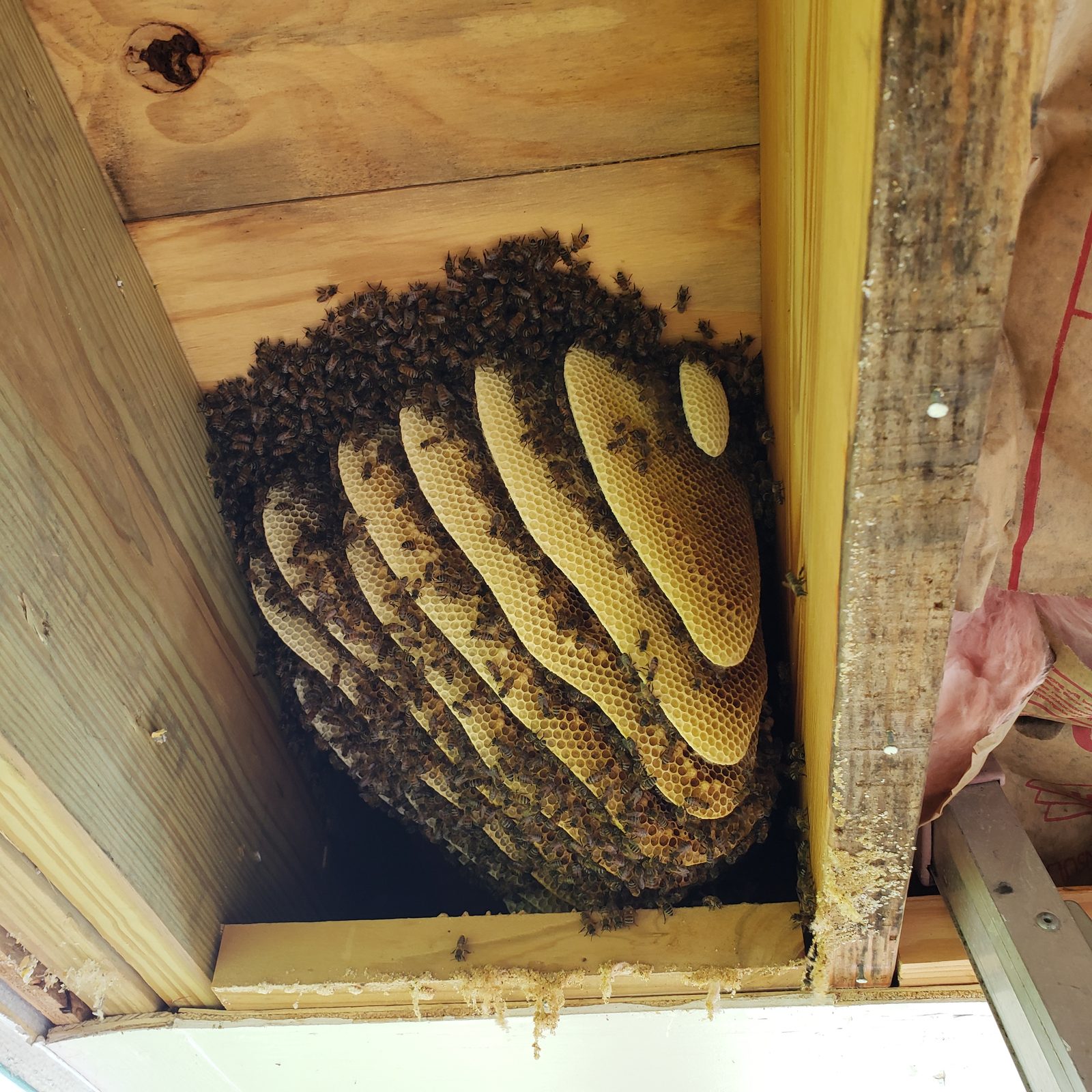
Suburban-commercial cavities
Common finds: eave gaps on two-stories, chimney caps, wall voids behind brick, meter rooms, and the occasional swarm hanging on landscaping overnight before it walks into a fascia joint. Multi-unit buildings need a manager or owner on the call if we open shared exterior. Private houses are standard residential dispatch.
League City is primary. Webster is a short Clear Lake–side run — close coverage, still an honest yes/no on timing when the board is full.
Swarm vs hive
Cluster that arrived today: swarm, often catchable live. Week of traffic at one hole or bees in living space: established comb, cutout. We locate, open carefully, take bees live when safe, remove every sheet of comb, and close the cavity. Leaving honey in a Webster wall is how you get ants and a repeat swarm on the same scent.
Why not extermination
Dead bees do not remove wax. Heat melts honey into insulation. The next colony follows the smell. Our work is relocation plus structure care — beekeeper and careful closer, not a fogger route.
Contact Webster dispatch
281-910-5864 · hello@honeybeeremovalnearme.com · honeybeeremovalnearme.com. Home-base detail: League City live bee removal. Coverage list: service areas. Photos help. Gate codes help. “Not sure where they are” is fine — we’ll diagnose on the call.
Between Clear Lake and Friendswood
Webster sits on the NASA-side corridor between Clear Lake and Friendswood. Apartments, medical strips, and house eaves share the same wall cavities. League City is home base. Webster is short-run coverage we drive, not a local office.
A shared exterior needs the manager or owner before we open it. Leave the entrance open. Keep kids and pets inside. Home base: League City bee removal. Field note: Attic wall cutout case study. What we do: Services. Send the address: Contact. Adjacent: Clear Lake bee removal, Friendswood bee removal, and Nassau Bay bee removal.
Where bees settle in Webster homes
Webster began in the 1870s as Gardentown, a farm settlement of English colonists brought in by James W. Webster. In the early 1900s Seito Saibara started a Japanese rice colony near Clear Creek. The old town grew along Highway 3 and the railroad. In older homes, bees use wall voids, porch ceilings, attic eaves, and chimney chases.
Most of Webster was built after the space center opened in the 1960s. Today it mixes townhomes, condos, and single-family streets. The whole city sits in the Clear Creek watershed, and Hurricane Ike and Hurricane Harvey both flooded homes here. On newer homes, check soffit corners, attic eaves, and wall voids around the garage. In the yard, check water meter boxes, irrigation valve boxes, sheds, and fence lines.
We remove the colony live: find the cavity, open only what the comb needs, take the bees and comb, and close the opening. In a townhome or condo, tell us which unit and which wall. Call Honeybee Removal at 281-910-5864.
FAQ for Webster
- Who does live bee removal in Webster, TX?
- Honeybee Removal — Charles Manning — does live honey bee removal and cutouts in Webster from League City, a short drive up the Clear Lake side. The bees are relocated and the comb comes out; we are not an exterminator. Call Honeybee Removal at 281-910-5864 or send photos.
- Do you have a shop in Webster?
- No. League City is home base. Webster is NASA-side coverage between Clear Lake and Friendswood that we drive. There is no Webster office.
- The bees are on an apartment or a medical building. Can you just open the wall?
- Not without the manager or owner. Shared exteriors need that person on the call. A private house is a normal residential visit.
- How do I tell a parking-lot swarm from a soffit cutout?
- A cluster that landed today in a tree or on landscaping is usually a swarm. Bees using one fascia gap for a week, or bees indoors, means comb is built. That is a cutout.
- Why not spray a Webster wall?
- Spray leaves honey in the cavity. Heat melts it into insulation and the next swarm follows the smell. We take the bees when we can move them safely and pull the comb.
- Where should kids and pets be?
- Inside, clear of the work area. Leave the entrance open. Do not seal the hole while the bees are still in the wall.
- When can I call?
- Call 281-910-5864 anytime. We will say whether the short drive from League City works today.
- How much does bee removal cost in Webster?
- It depends on where the hive is and how much has to be opened. Honeybee Removal quotes Webster jobs from photos first, then gives you a firm price before any work starts. See the bee removal cost guide.
- Where do honey bees usually build in Webster houses?
- In older homes near Highway 3 and the old town: wall voids, porch ceilings, attic eaves, and chimney chases. In townhomes, condos, and single-family homes built since the 1960s: soffit corners, attic eaves, and wall voids around the garage. In yards: water meter boxes, irrigation valve boxes, sheds, and fence lines. Honeybee Removal takes the bees and comb out live. Call Honeybee Removal at 281-910-5864.
- Is bee removal free in Webster?
- Swarms and established hives are priced differently. A swarm hanging on a branch or fence is usually a short capture visit, with no opening of the structure. An established hive in a wall, soffit, or attic is a cutout: we open the structure, remove the comb, clean the cavity, and repair what we opened, so it costs more. Send photos for a range, and you get a firm price before any work starts.
What “live removal” means in Webster
When we say live removal, we mean we take the colony intact when the cluster or hive can be moved safely into a box for relocation — not that every job is gentle, and not that we fog first. Cutouts still open structure. The difference is the comb leaves with us, the cavity gets closed, and honey is not left to rot in a Webster wall. Charles Manning will tell you on the call whether your situation looks like a swarm catch or a cutout before anyone picks up a saw.
If you’re comparing quotes, ask every company how they remove comb and how they close the hole. If they can’t answer, they’re not doing this job.