Bee Swarm Removal
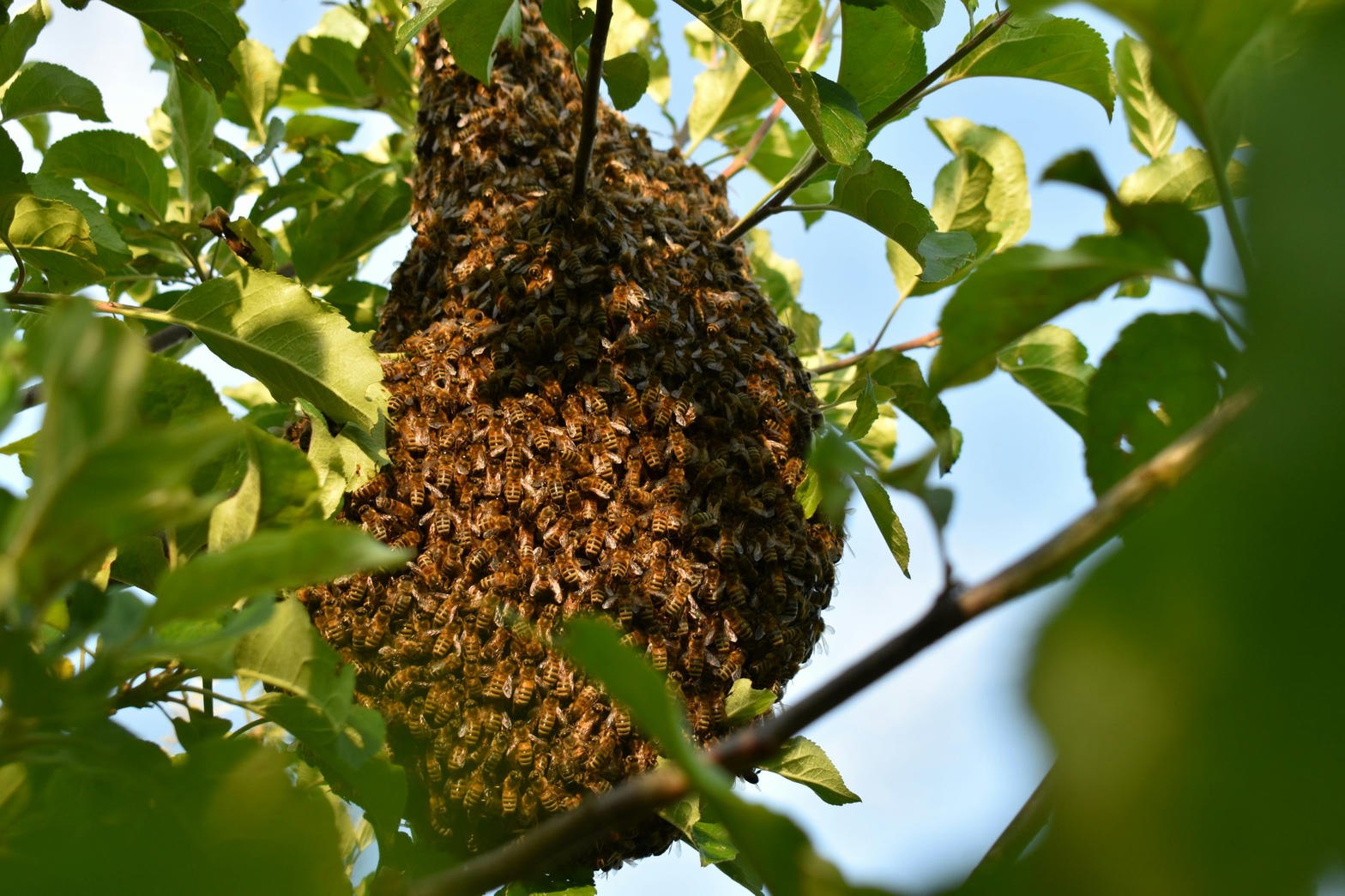
A swarm is a temporary cluster of honey bees that left a hive to find a new home. They hang in a ball on a branch, fence, playset, or eave while scouts look for a cavity. Don't spray them. Honeybee Removal does live swarm capture near League City and across Greater Houston - we box the cluster when we can and relocate it when it can be moved safely. Call 281-910-5864 any hour or send photos through the quote form.
Swarm vs hive in the wall
- Swarm: a ball of bees that showed up today on a branch, fence, playset, or eave. No comb in a wall yet. That's swarm capture (this page).
- Hive in the wall: steady traffic in and out of one crack, soffit seam, attic vent, or chimney for days; buzzing through drywall. That's an established colony with comb - see Bees in your wall, soffit, or attic and Services.
What to do until we arrive
- Keep people and pets away from the cluster.
- Don't spray, fog, or hose the bees.
- Don't seal a hole if bees are going into a wall, soffit, or attic - that may already be a hive. If you're not sure, send a photo and see Bees in your wall, soffit, or attic.
- A clear photo of the cluster (and where it is on the property) helps us know what to bring.
How swarm capture works
- Assess whether it's an open swarm or bees already using a hole into a structure.
- Live-capture the cluster into a box or nuc when the job allows.
- Relocate the colony when it can be moved safely.
How it works. If it turns out to be a wall/attic hive, we switch to a cutout - Bees in your wall, soffit, or attic.
Where swarms show up around League City and Houston
Swarms land on trees, fences, playsets, shed walls, meter boxes, and eaves on homes across League City, Dickinson, Friendswood, Clear Lake, Pearland, Houston, Kemah, and Seabrook. Colony already living in a meter box? See bees in water meter box removal.
Bee swarm questions
- What is a bee swarm?
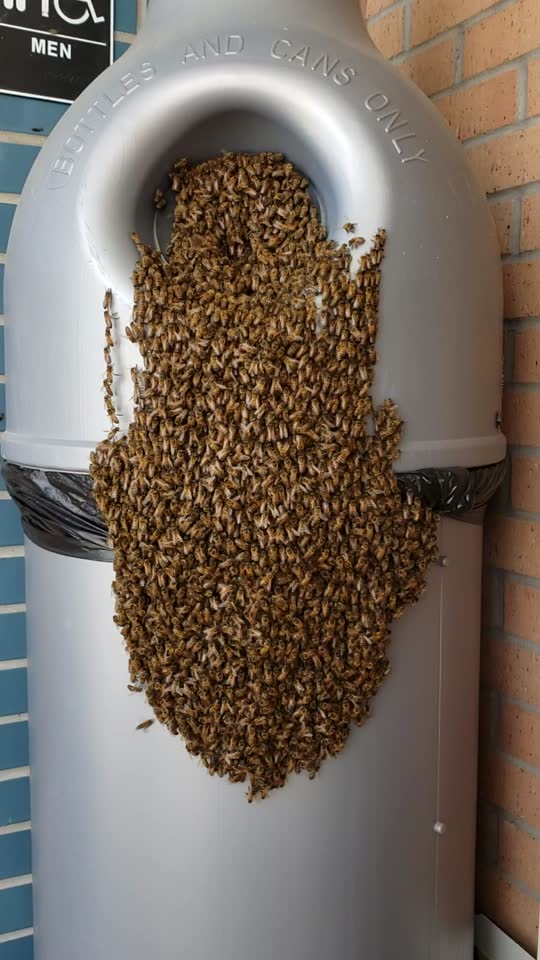
- A swarm is a temporary cluster of honey bees that left a hive with their queen to find a new home. They hang in a ball on a branch, fence, playset, or eave while scouts look for a cavity. They usually have not built comb in your wall yet.
- Is a swarm the same as bees in my wall?
- No. A swarm is an open cluster that arrived recently. Bees going in and out of one gap for days, or buzzing behind drywall, means an established hive with comb inside. For wall, soffit, attic, or chimney colonies see our bees in wall page.
- Do you kill swarming bees?
- No. Honey bees are removed live whenever the job allows. For a swarm we capture the cluster into a box or nuc when we can and relocate the colony when it can be moved safely.
- Will a swarm leave on its own?
- Often a swarm moves on within a day or two once scouts find a cavity - sometimes into a wall, soffit, or tree hollow nearby. Don't spray while you wait. Call so we can try a live capture before they move into the structure.
- What if the bees are going into a hole?
- If they are using one crack, weep hole, soffit seam, or vent, treat it as a possible hive, not a hanging swarm. Don't seal the hole. Send photos and see bees in wall removal - that job needs comb removed, not just a box on a branch.
- How do I get help, and what affects the cost?
- Call 281-910-5864 or send photos through the quote form. Cost depends on whether it is an open swarm or an established hive, height and access, and how much opening and repair is needed if it is in a structure. We give a range from photos, then a firm price before any work starts.
- Is swarm removal free?
- Swarms and established hives are priced differently. A swarm hanging on a branch or fence is usually a short capture visit, with no opening of the structure. An established hive in a wall, soffit, or attic is a cutout: we open the structure, remove the comb, clean the cavity, and repair what we opened, so it costs more. Send photos for a range, and you get a firm price before any work starts.