Walls & attics
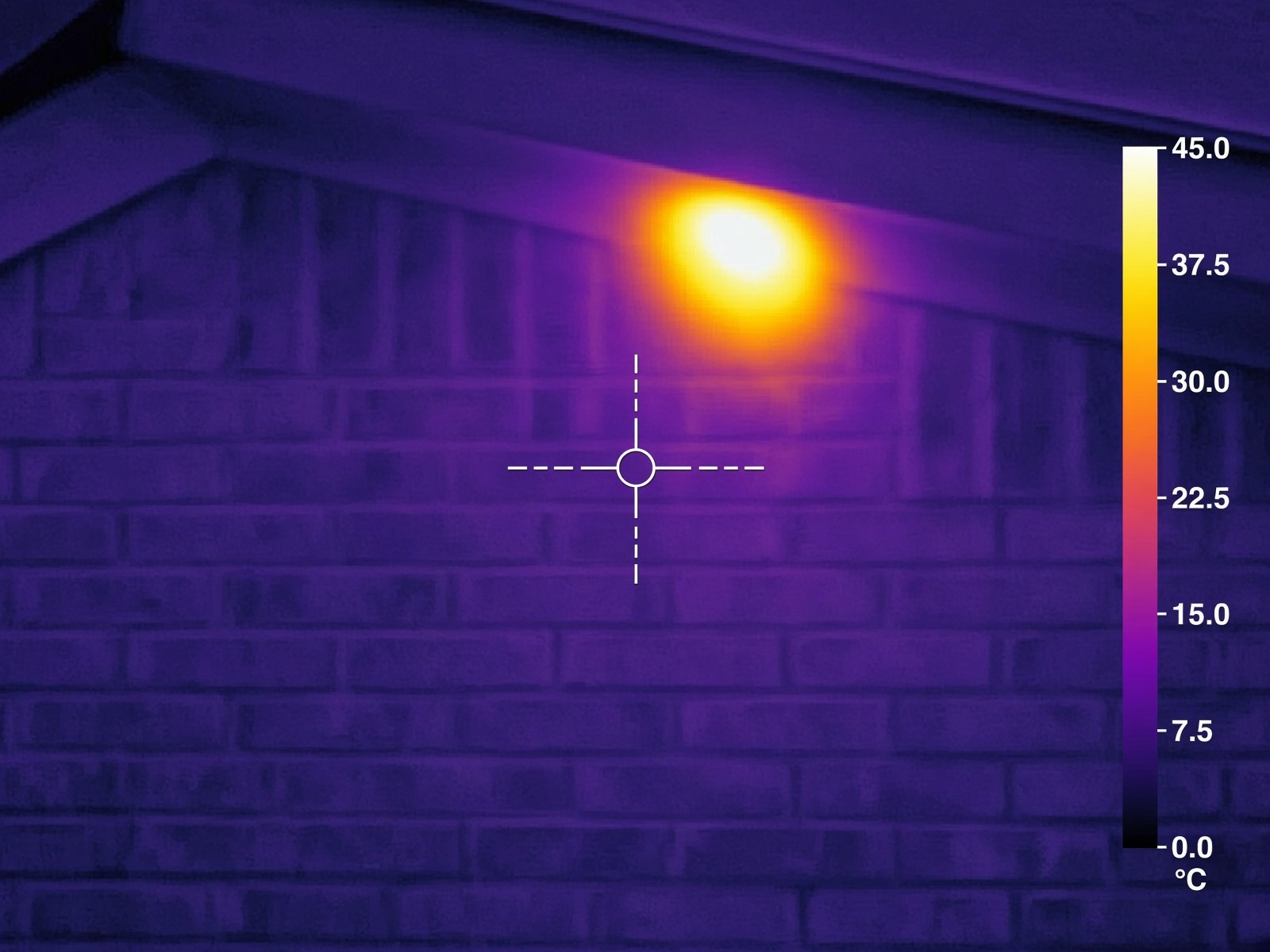
Cavity colonies behind siding, stucco, and drywall. Thermal locate, then a clean cutout.
Houston & Greater Houston · Live honey bee removal
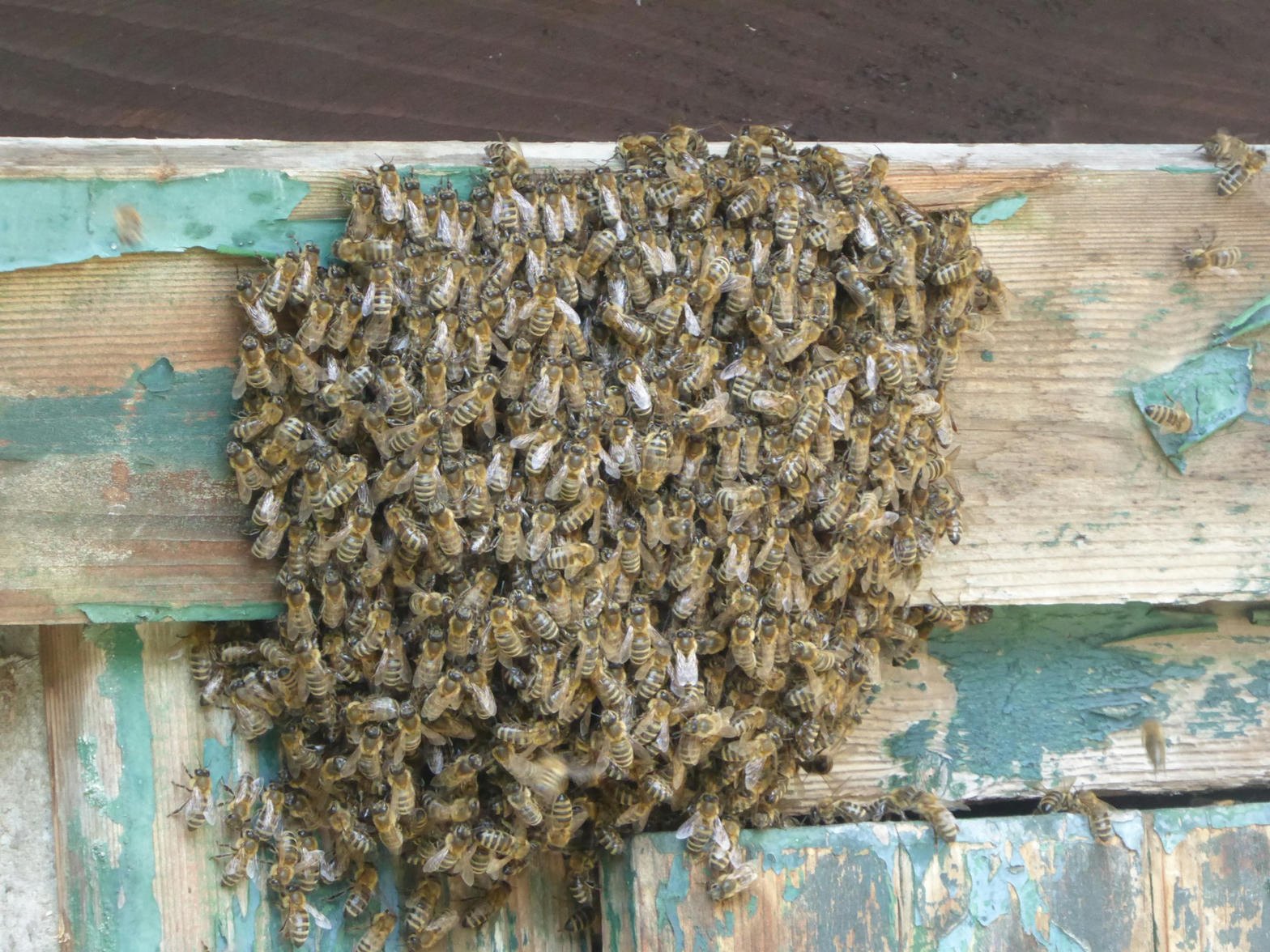
A hanging swarm is a short job. A hive in a soffit, chimney, or wall is a cutout. We relocate live bees, pull every sheet of comb, and close the cavity so honey doesn’t rot in your house.
How much does bee removal cost? It depends on where the hive is and how much has to be opened — send photos for a range; you get a firm price before work starts. See bee removal cost.
It depends on where the hive is and how much structure we have to open. Honeybee Removal — Charles Manning — quotes from photos first, then a firm price before work. No two cutouts are the same. Details: bee removal cost.
24/7
Call any hour. Typical callback in 30 minutes.
Comb out
Honey left in a wall is a second infestation
Sealed
We close the hole. Not a lifetime guarantee.
Proof from the field
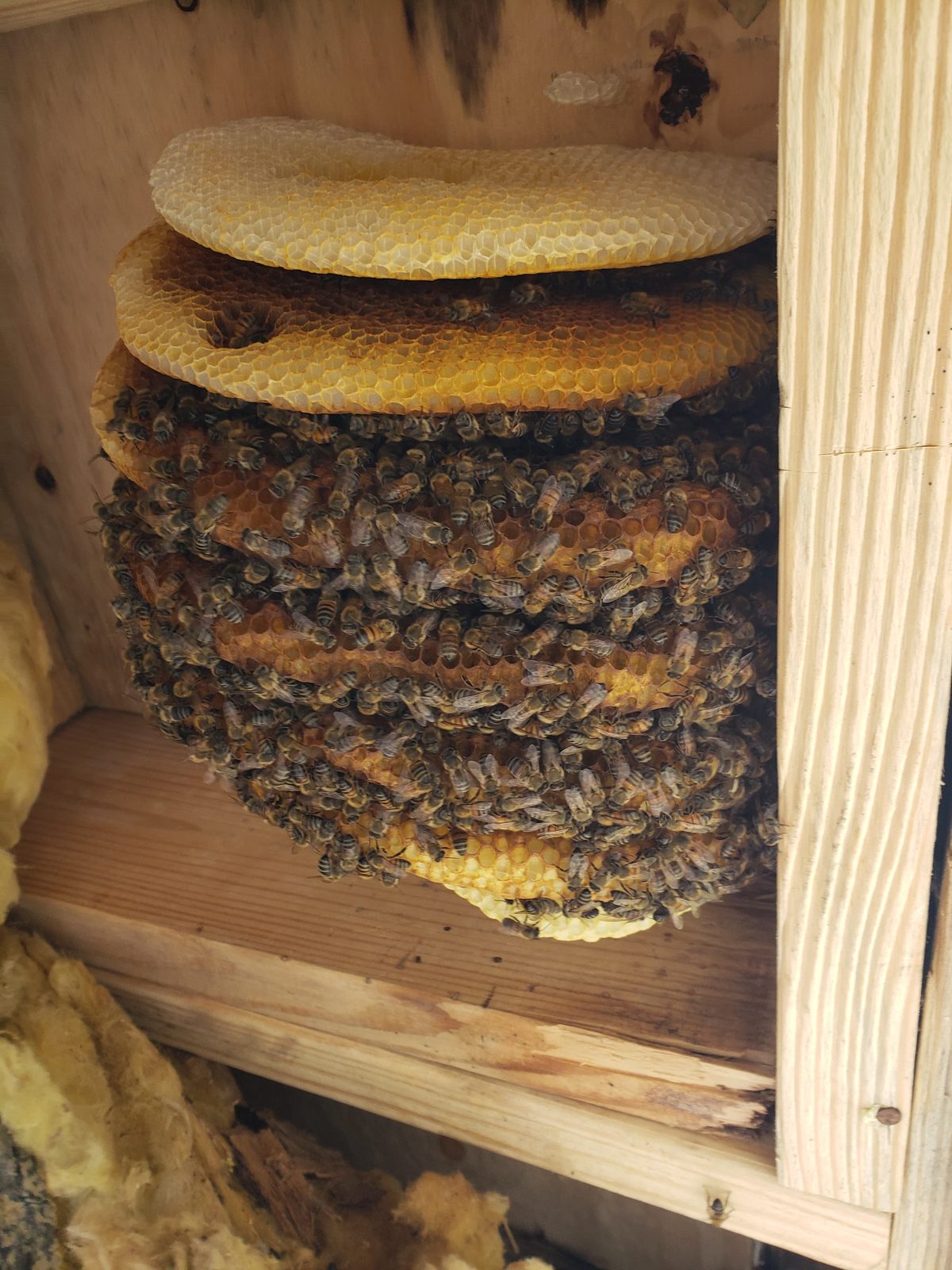
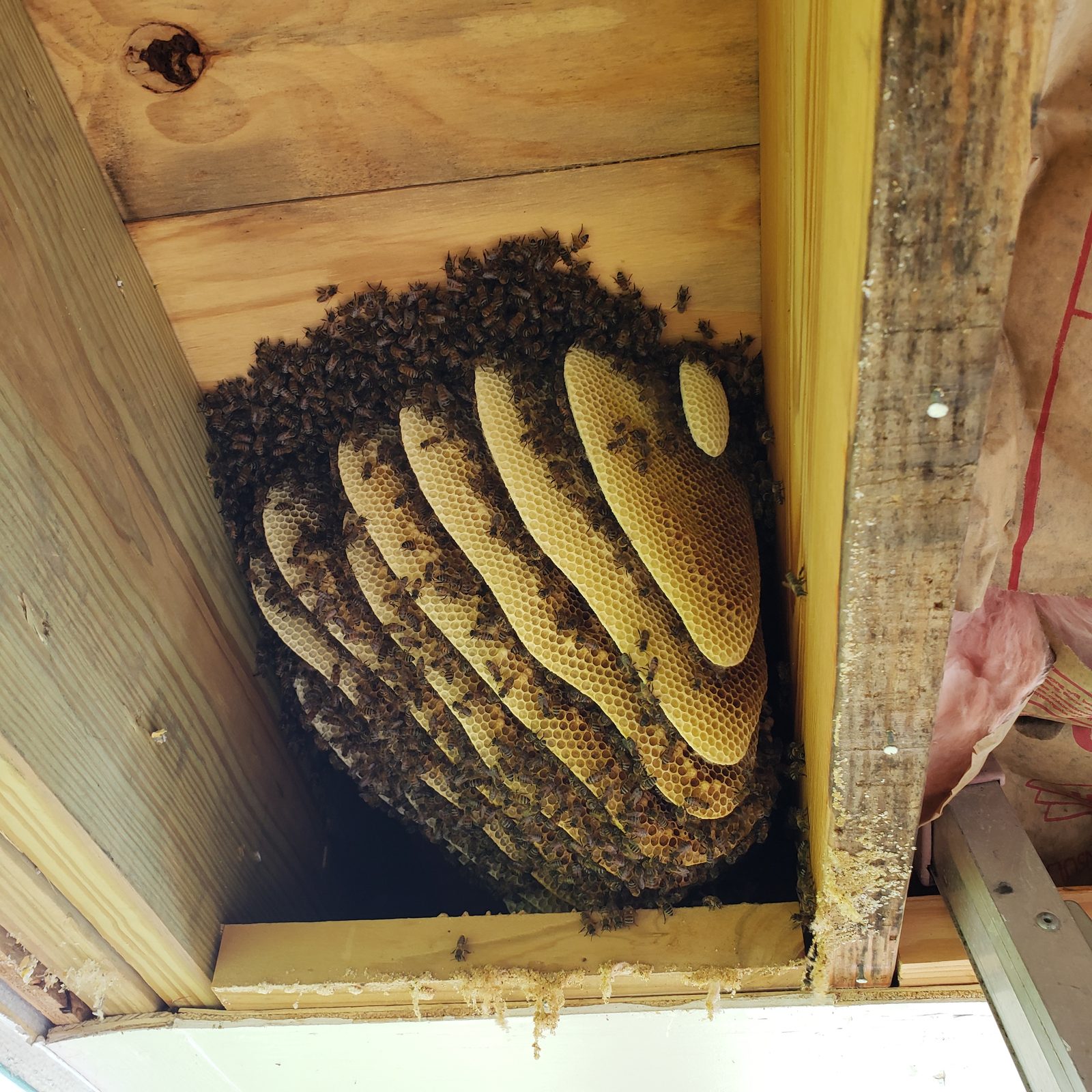
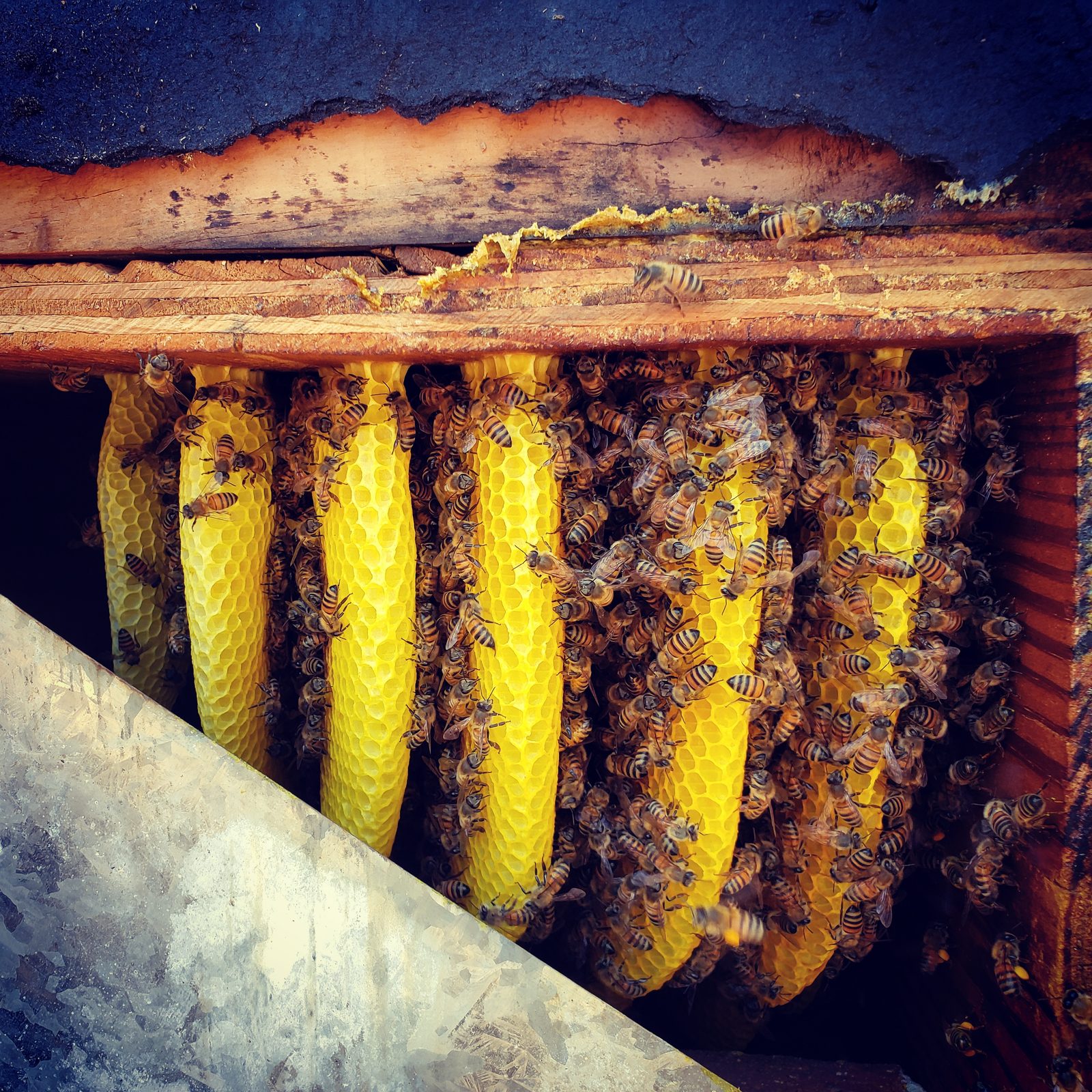
Work by Honeybee Removal / Charles Manning. These clips are from actual cutouts and swarm calls — not stock footage.
Case studies
Attic/wall cutout in League City. Eave hive in Dickinson. Real comb, no invented reviews.
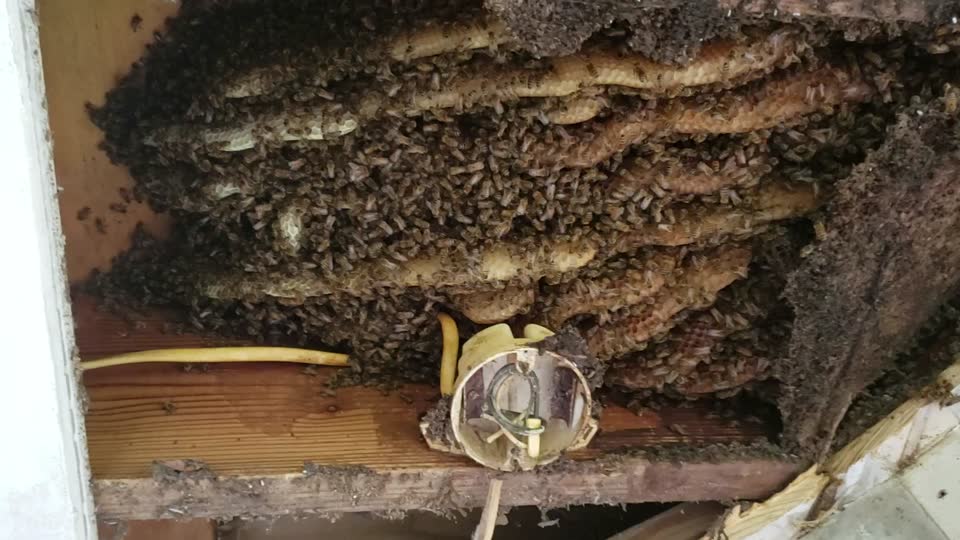
League City bee removal
A League City homeowner noticed honey bees using a small opening near the roofline.
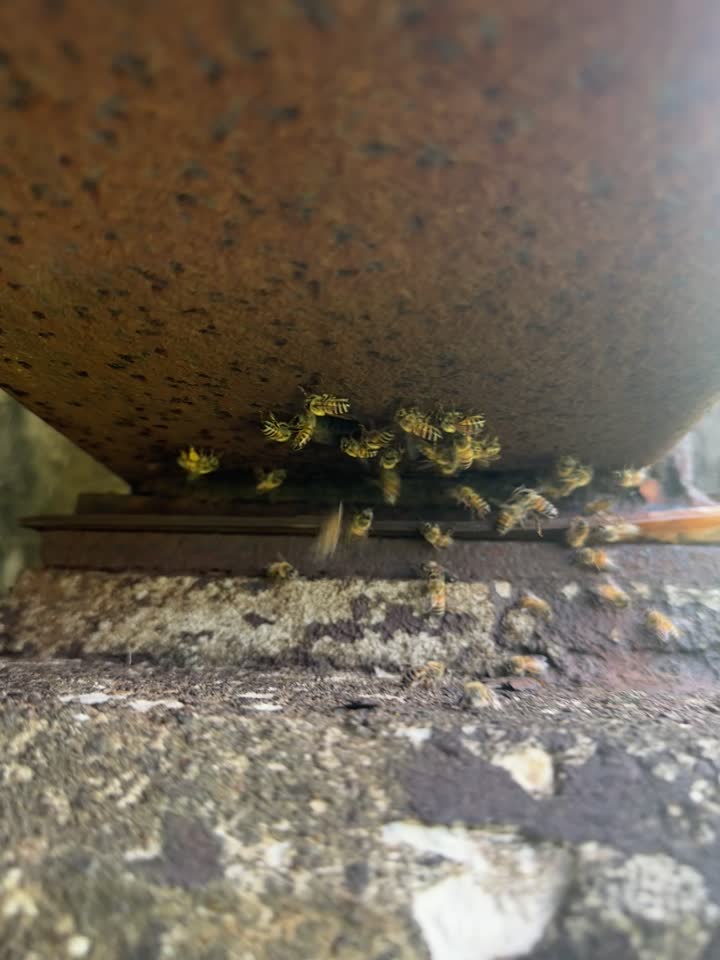
Dickinson bee removal
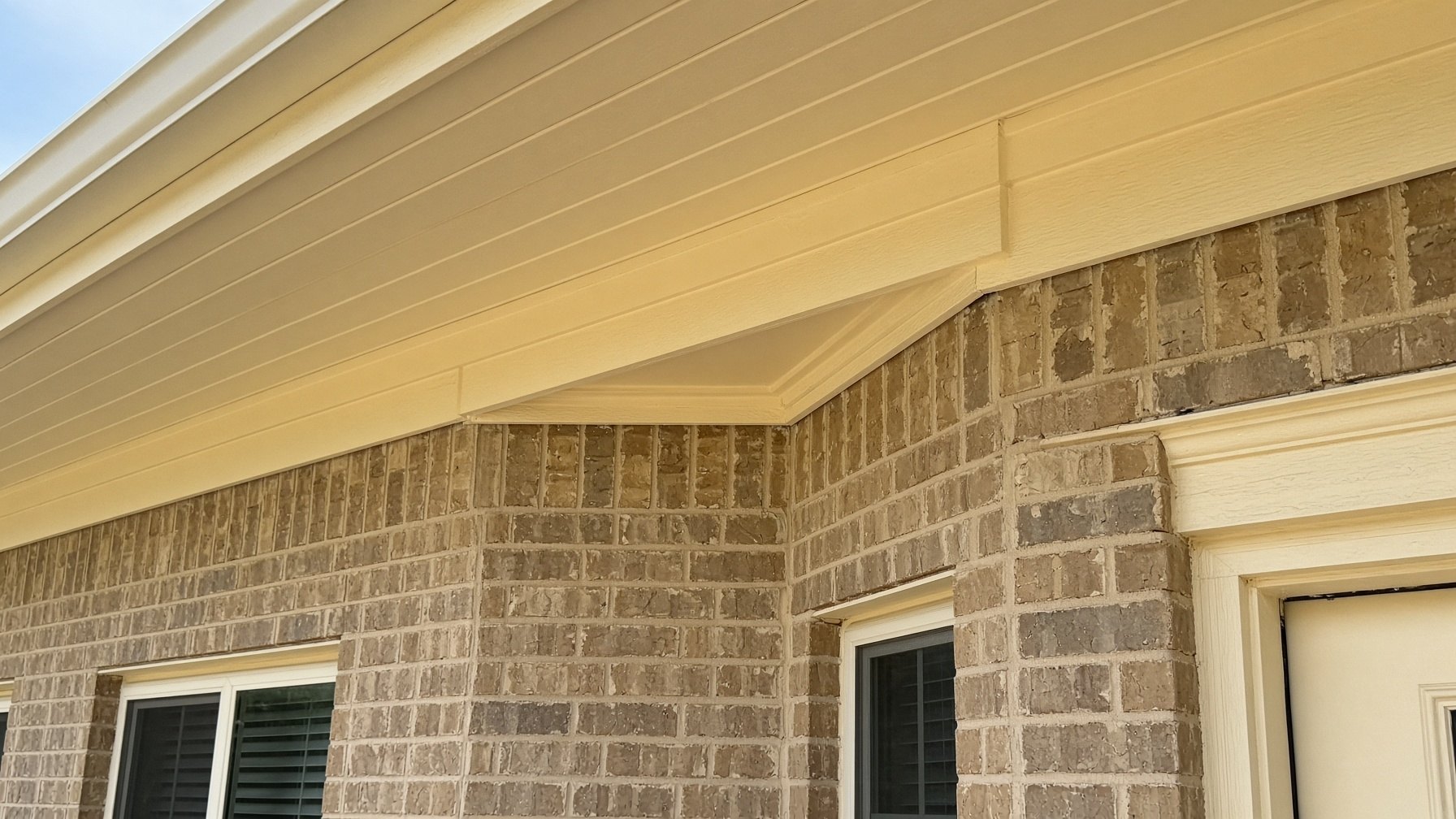
A Dickinson homeowner began seeing a thick stream of honey bees disappear behind the soffit above a side entry.
Where they hide
Honey bees are cavity nesters. If you have a hole and a dark void, they will try it — weep holes, soffit gaps, chimney caps, meter boxes, even a children’s playhouse. See what to do about bees in a wall or bees in a water meter box.
Cavity colonies behind siding, stucco, and drywall. Thermal locate, then a clean cutout.
The most common entry is a gap where materials change. We open only what we need.
A hanging cluster on a branch, fence, or playset is often a same-day catch-and-relocate.
Garages, meter boxes, irrigation lids, and outbuildings. Same rule: bees and comb, not poison.
Swarm or cutout
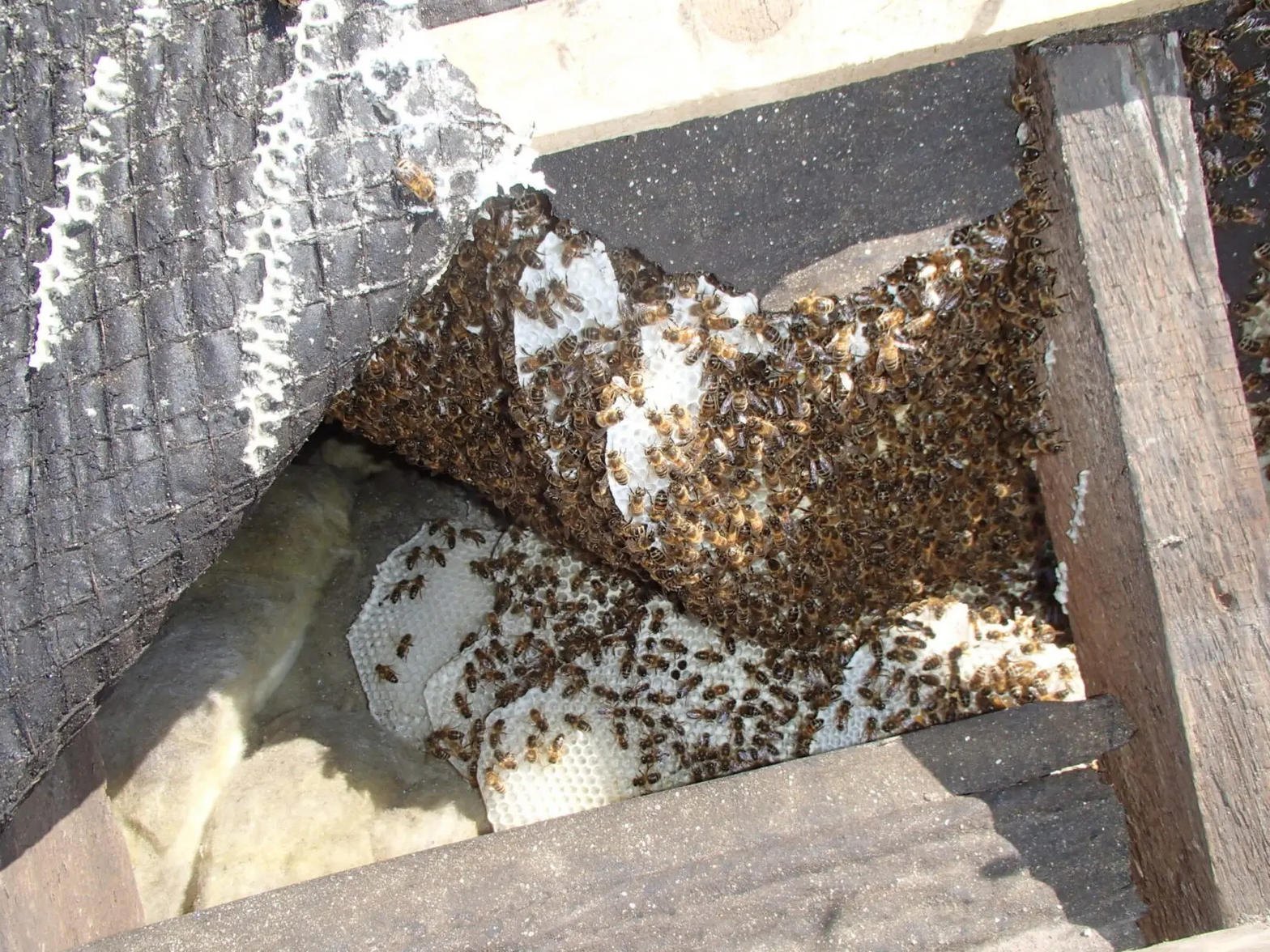
If they arrived today and they’re hanging in a ball, that’s a swarm — usually docile, usually a same-day relocate. If they’ve been flying in and out of one hole for a week or more, there is comb, brood, and honey behind the surface. That’s a cutout. Spraying it leaves a rotting hive in the structure.
Bee swarm hanging on a tree or fence?Bees in your wall?
See the work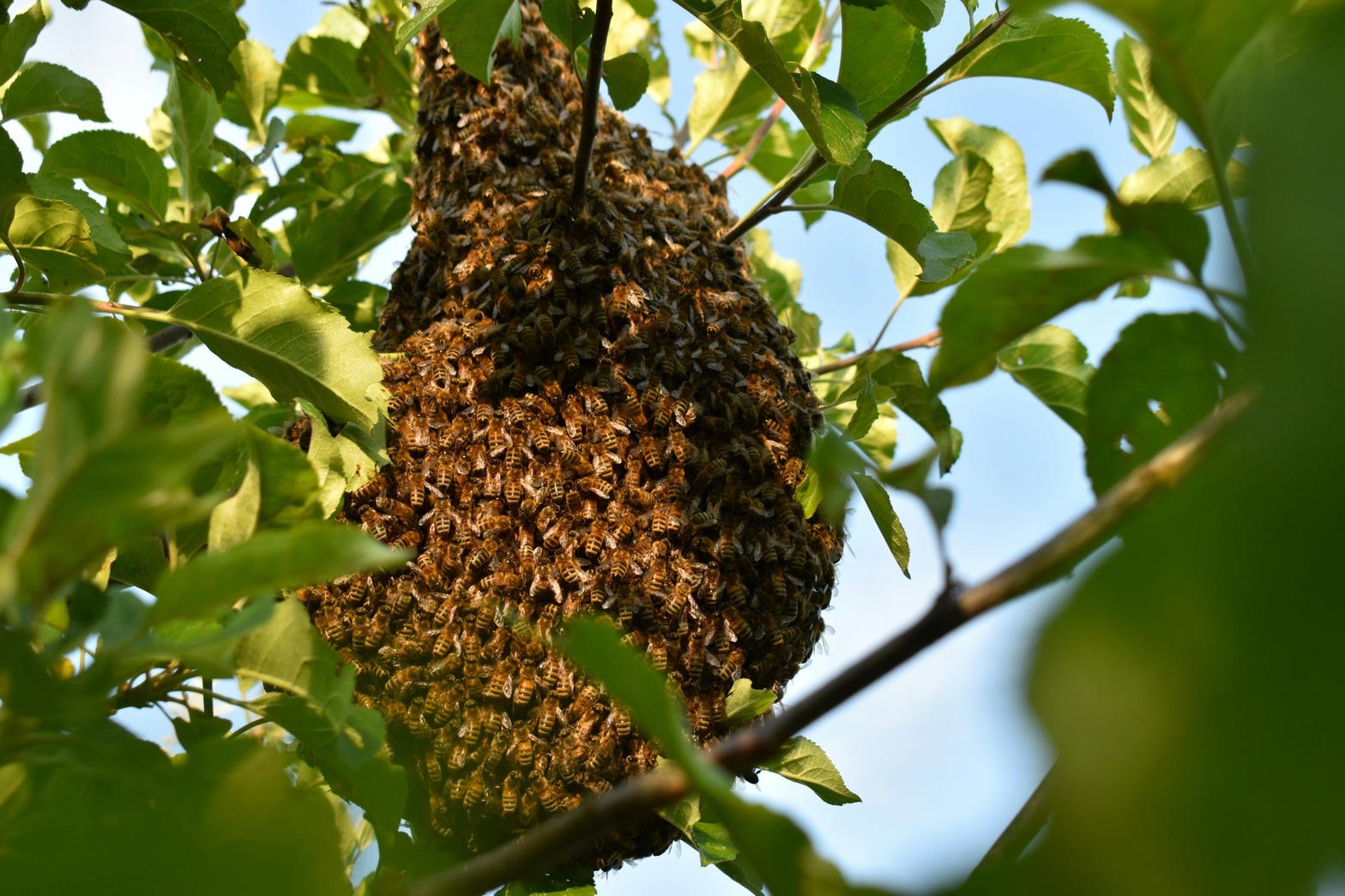
The job
01
The form on this page. Location, how long, and a phone number we can actually reach.
02
Swarm or established hive, access, and a range — usually from photos. No mystery visit fee.
03
Thermal camera, live extraction, comb and honey out, entry closed so they don’t come back.
Don’t
Don’t spray an established hive
Dead bees leave pounds of honey and wax in the wall. It melts, ferments, and draws ants, roaches, and the next swarm to the same scent.
Don’t seal the hole while they’re inside
They will chew a new exit — often into a bedroom. Leave the entrance. We close it after the colony and comb are out.
Don’t hire a spray-only pest route
A live-removal crew is a beekeeper plus a carpenter. If they can’t explain how they’ll get the comb out, they aren’t doing this job.
Coverage
League City first — that’s the primary response area. Then Friendswood, Dickinson, and Clear Lake, then Baytown, Pasadena, Pearland, Galveston, Kemah, Seabrook, La Porte, and Deer Park, Texas City, Santa Fe, Alvin, Manvel, Webster, Nassau Bay, El Lago, Shoreacres, and Hitchcock, La Marque, Bellaire, Sugar Land, Missouri City, and Stafford. Live bee removal in Houston is its own page. If you’re farther out, say so on the form and we’ll tell you honestly. We remove the bees and the comb, relocate the colony when it can be moved safely, and seal the entry.
Fill the form at the top of this page, or call. Leave the entrance open. Keep kids and pets inside until we say otherwise.