Bees in Wall Removal in League City & Houston
Honeybee Removal removes live honey bees from walls in League City and Houston, TX. If bees are going in and out of one gap in your wall, soffit, eave, attic, or chimney for more than a day or two, they have moved in and are building comb inside. Don't spray it and don't plug the hole. Honeybee Removal opens the spot, takes out the bees and every sheet of comb, relocates the colony when it can be moved safely, then rebuilds what we opened and screens the entry. We're based in League City and work across Greater Houston. Call 281-910-5864 any hour or send photos through the quote form.
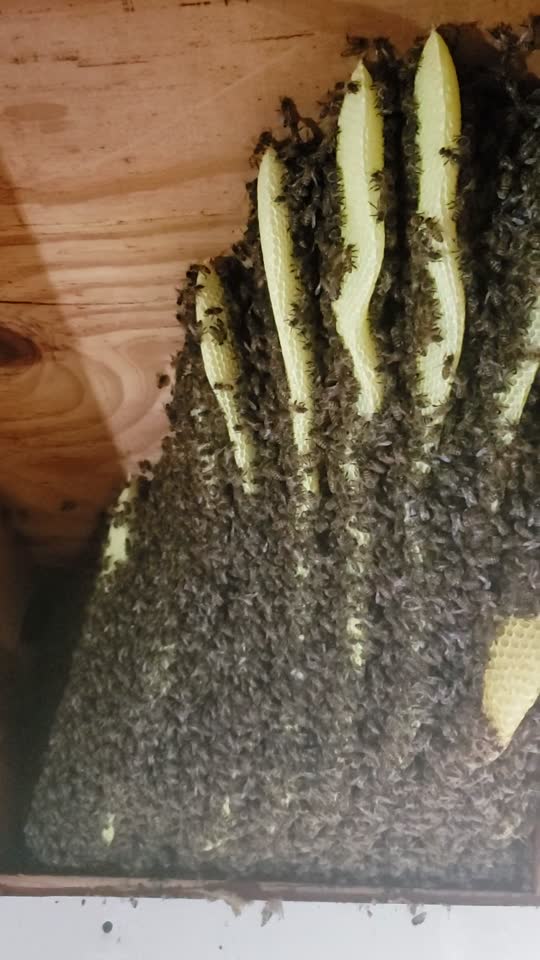
How to tell it's a hive, not a swarm
- Swarm: a ball of bees hanging on a branch, fence, or eave, arrived today, usually moves on within a day or two. That's a swarm capture. Open cluster on a branch or fence: Bee swarm removal.
- Hive: steady traffic in and out of one crack, vent, weep hole, or soffit seam for days; buzzing you can hear through drywall; bees showing up inside near lights or vents. That's an established colony with comb.
Why you can't just spray or seal it
- Spraying kills bees but leaves the comb and honey. In Gulf Coast heat it melts, stains drywall and ceilings, smells, and draws ants, roaches, rodents, and the next swarm to the same cavity.
- Plugging the hole traps the bees; they chew or find another way out, often indoors.
What a cutout looks like
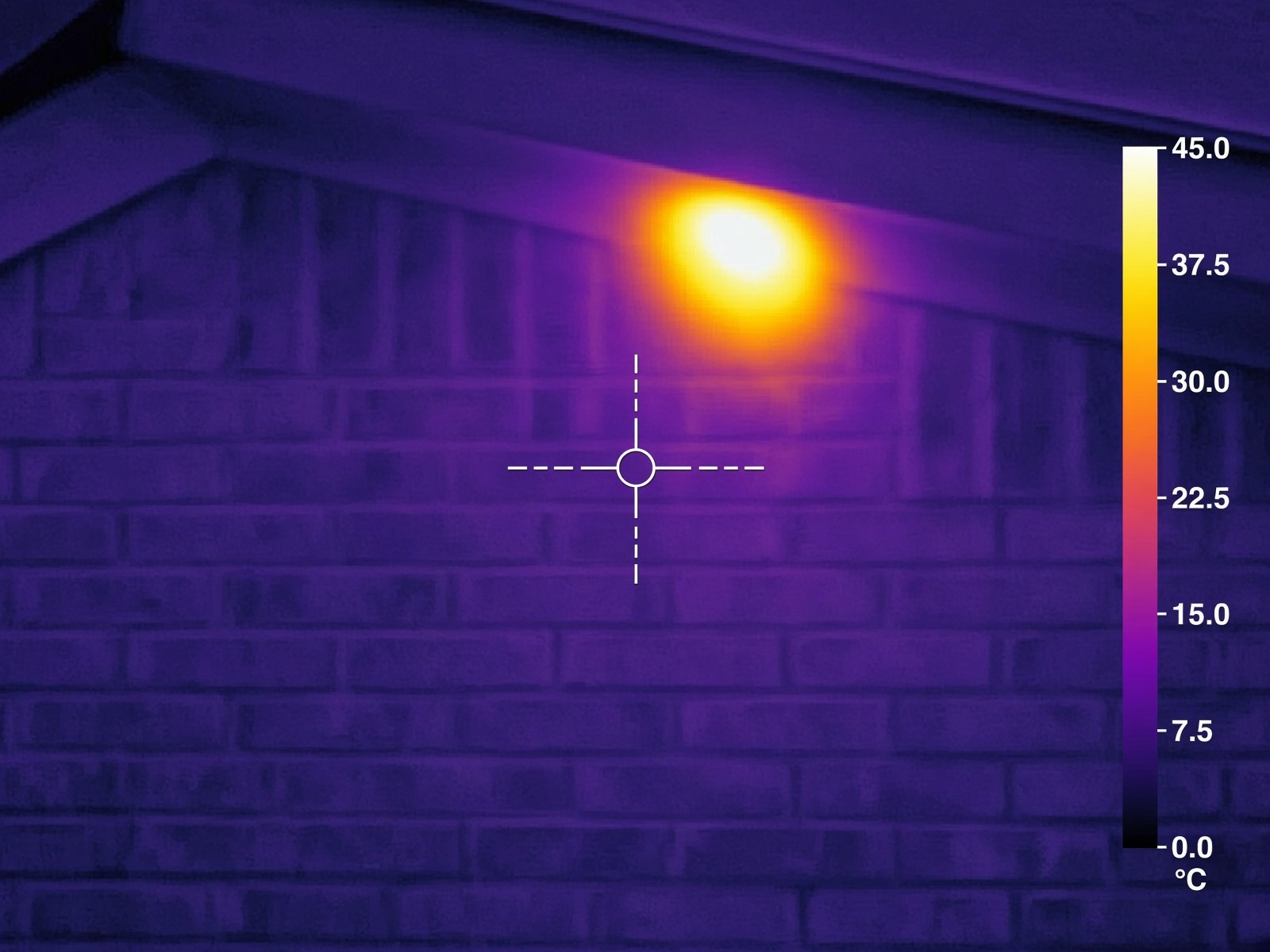
- Locate the hive with a thermal camera so we open only where the comb is.
- Open the wall, soffit, ceiling, or attic section.
- Remove the bees and every sheet of comb; relocate the colony when it can be moved safely.
- Clean the cavity, close what we opened, and screen the original entry. (Entry screened — not a lifetime guarantee.)
Where we find them around League City and Houston
Wall voids, soffits and eaves on one- and two-story homes, attic gables, chimneys, porch columns, meter and irrigation boxes, sheds, and under mobile homes. We cover League City bee removal, Dickinson bee removal, Friendswood bee removal, Clear Lake bee removal, Pearland bee removal, and Houston bee removal.
Bees in the wall — questions
- How do I know if bees are living in my wall?
- If bees keep going in and out of the same gap for more than a day or two, or you can hear buzzing behind drywall, a colony has moved in and is building comb. Send a photo of the entry and we'll tell you what it is.
- Can I just spray the hole or seal it up?
- No. Spraying leaves the comb and honey in the wall, where it melts, stains, smells, and draws pests and new swarms. Sealing traps the bees and pushes them to find another way out, often into the house.
- Do you have to open the wall?
- For an established hive, yes. The comb has to come out. We use a thermal camera to find it so we open only where it is, then close what we opened and screen the entry.
- Do you kill the bees?
- No. Honey bees are removed live whenever the job allows and the colony is relocated when it can be moved safely. A colony that's already been sprayed may not survive, but we still take out the comb.
- How much does it cost to get bees out of a wall?
- It depends on where the hive is, how big it is, how high it is, and how much has to be opened and rebuilt. Send photos and the address through the form or call, and we'll give you a range, then a firm price before any work starts.
- What should I do until you get there?
- Don't spray or plug the hole. Keep kids and pets away from the entry and inside if bees are coming into the house. Call 281-910-5864 any hour.
- Is bee removal free?
- Swarms and established hives are priced differently. A swarm hanging on a branch or fence is usually a short capture visit, with no opening of the structure. An established hive in a wall, soffit, or attic is a cutout: we open the structure, remove the comb, clean the cavity, and repair what we opened, so it costs more. Send photos for a range, and you get a firm price before any work starts.